
Blowflies, flystrike and treatment options
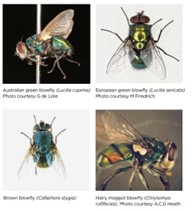
Blowflies are slightly larger than houseflies. In New Zealand, we have multiple species that cause flystrike on sheep.
Primary Strike flies: can initiate flystrike on intact skin.
- Lucilla cuprina (Australian Green Blowfly)
- Lucilla sericata (European Green Blowfly)
- Calliphora stygia (Brown Blowfly)
Secondary Strike flies: require a wound to initiate flystrike.
- Chrysoma rufifacies (Hairy Maggot Blowfly)
- Other Calliphora species
What do they do?
Adult flies lay eggs on sheep that hatch into maggots.
1st stage maggots: have no mouthparts and feed on the surface of the skin.
2nd and 3rd stage maggots: have hook-like mouth parts and feed by scraping the skin and secreting enzymes that “liquefy” the skin.
During feeding, maggots cause significant damage to the sheep and the wound attracts more flies, which can quickly exacerbate the damage.
Common signs of blowfly
Initially sheep show signs of mild irritation; foot stomping, tail twitching, rubbing, and biting. Even these early stages result in less time grazing and loss in production.
If left untreated and the flystrike progresses, sheep loose fluid and protein through the wound and are susceptible to toxaemia from the tissue damage.
In severe cases, sheep often die. Treated sheep can take up to 6 weeks to regain lost weight and up to 8 months for their fleece to recover.
The blowfly life cycle and ideal conditions
Blowflies need warmth and humidity and prefer areas sheltered from wind.
Therefore, the main fly season tends to be from November to March but may be longer or shorter in some areas.
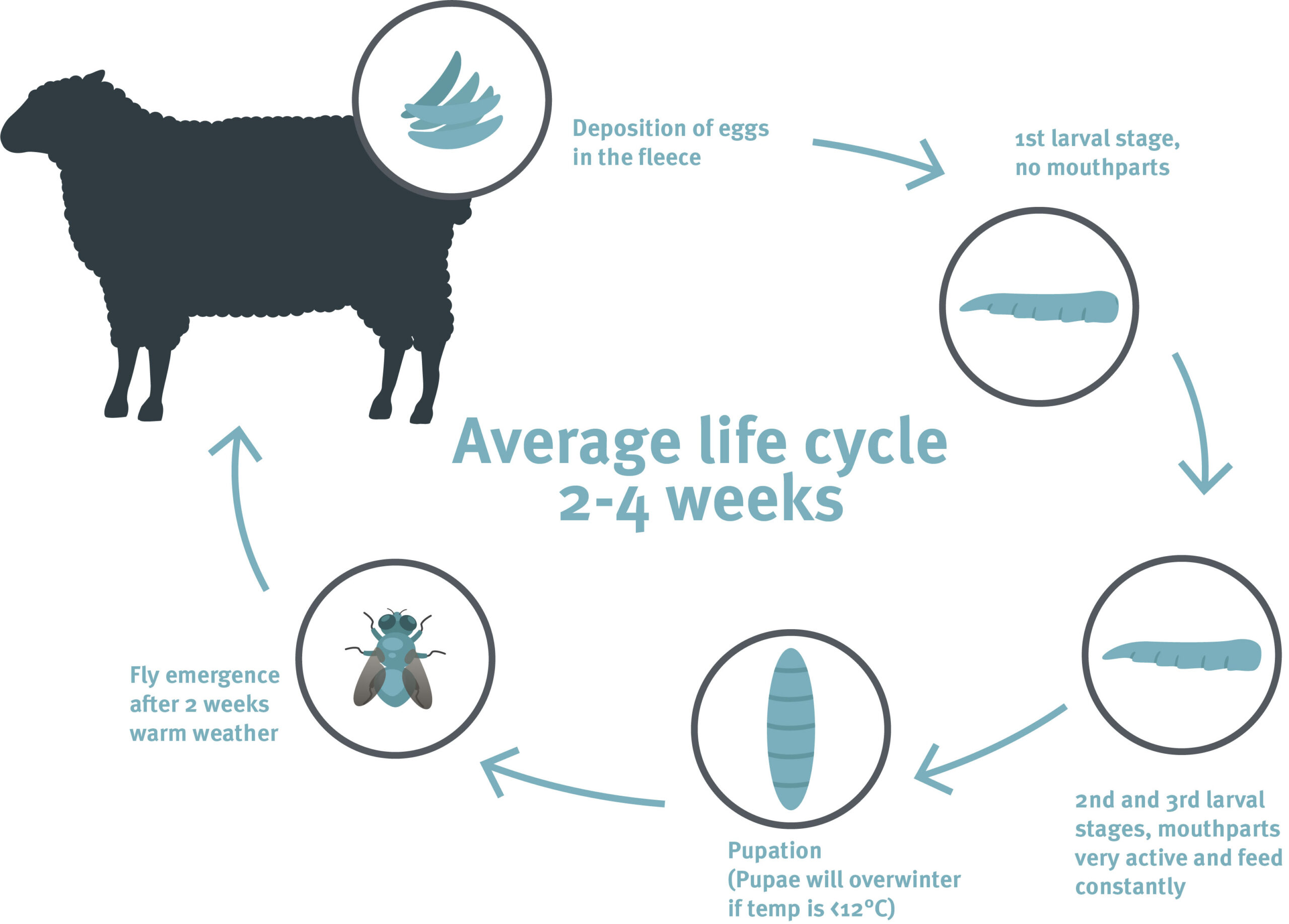
Adult flies are attracted to sheep and lay their eggs in the wool.
Eggs hatch within 24 hours and first stage maggots feed on the surface of the skin.
Maggots moult twice more, becoming second and third stage maggots. These stages have damaging mouthparts and feed aggressively through the skin and muscle of sheep over 3-5 days.
Third stage maggots develop into Pupae that fall onto the ground where they go on to develop into adult flies or if temperatures are below 12˚C, they will overwinter until conditions are favourable.
Adult female blowflies require a protein feed before egg laying can occur – they lay up to 300 eggs every 4-8 days.
Factors that attract blowflies to sheep:
- Dags
- Docking wounds
- Urine staining
- Fleece rot
- Footrot
- Rams head fighting injuries
- Wrinkled skin on the crutch of merinos
Treatment options for blowfly or flystrike
Flystrike is the most economically significant ectoparasite of sheep in New Zealand.
Not only is it of economic importance but, from an animal welfare perspective, prevention is paramount.
Although reducing attracting factors such as dags and wounds can help reduce infestation, chemical control is pertinent to preventing flystrike in sheep farmed in fly prevalent areas.
Cyromazine is an insect growth regulator that works to protect against flystrike by preventing larvae from moulting to the next stage. This means eggs can still be laid but the strike will not progress past the first larval stage, at which the flies have no mouthparts and cannot cause any damage.
Cyromazine is available in two different concentration forms; length of action is dependent upon application method.
1. Cyromax Spray On
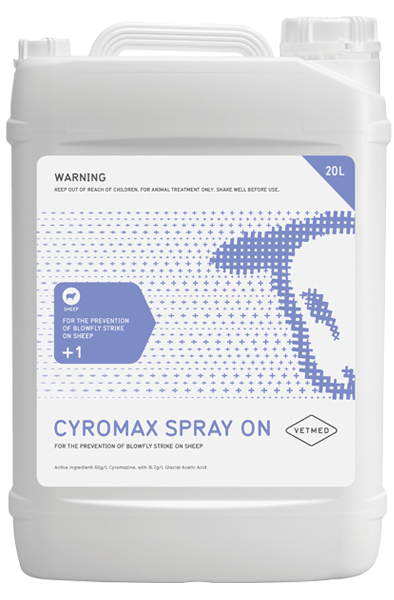
- A diluted solution ready to spray on.
- Easily applied with a spray gun.
- Provides up to 6 weeks protection
- 7 day meat withholding, 35 day milk withholding and a 2 month wool residue
Application is critical to length of action.
2. Cyromax Liquid
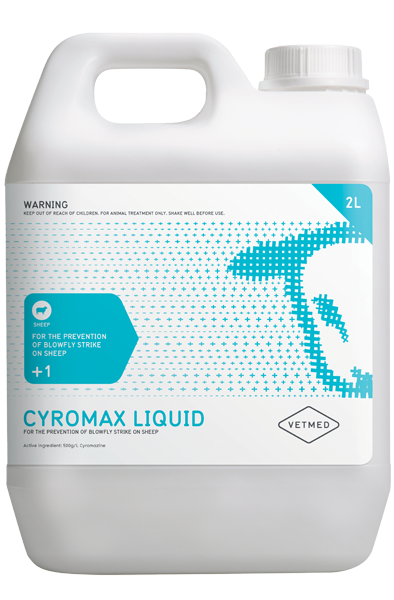
A concentrated form to be diluted and delivered via jetting race, wand or shower/plunge dip.
- Mix at 2L cyromazine : 1000L water for long acting upto 12 weeks protection
- Can be used at 1L cyromazine: 1000L for short acting upto 6 weeks protection through shower or plunge dips only.
- Application is critical to achieve length of protection and full saturation is required for optimal protection.
- Apply 0.5L of wash per month of wool growth aiming for a minimum of 2L of wash per sheep upto 5L per sheep.
- 7 day meat withholding, 35 day milk withholding and a 2 month wool residue