
Tick lifecycle, infestation and treatment options
Ticks are relatively large round bodied blood sucking external parasites. Adult ticks are easy to see.
A tick has two body segments; a fused head and thorax, and an abdomen. Ticks have four pairs of legs (adults and nymphs) and no wings or antennae.
The one main tick important to cattle and deer in New Zealand is Haemaphysalis longicornis (also known as the NZ cattle tick or bush tick).
An unfed adult tick is about 3 x 2mm. Only the females ‘engorge’, growing to around 9 x 7mm in size.
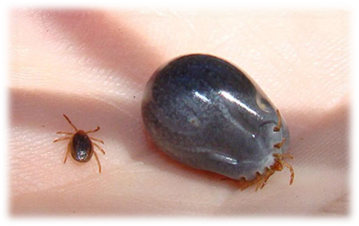
What do ticks do?
Ticks attach to their host with their barbed teeth and cement-like saliva.
Once attached they feed off the host’s blood, one adult can remove as much as 0.75-1mL of blood per feed.
As ticks come in contact with multiple hosts through their life cycle, they can transmit blood borne diseases such as Theileria.
Common signs of tick infestation
- Irritation
- Blood and protein loss – this is most significant in young animals such as fawns and calves.
- Spread of blood borne disease; Theileria
- Damage to hide at attachment site.
Life cycle of the tick and ideal conditions
Adult female ticks lay eggs on pasture, laying up to 2,000 eggs over 2-3 weeks in warm conditions.
Hatching takes up to 90 days but occurs fastest when conditions are favourable: warm and moist (usually late summer/autumn).
The hatched larva find a host to feed on (this could be anything from a deer to a cow to a mouse).
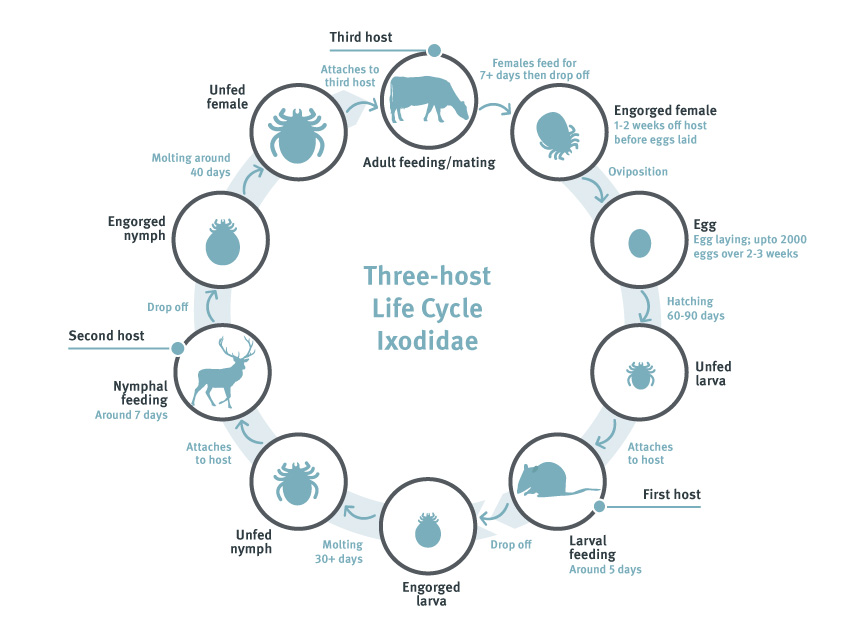
Once fed (engorged), they drop off and develop to the next stage – the Nymph, over 30+ days. This development is slowest in cold conditions, but larvae can survive long periods of cold hidden in grass root mats. Nymphs continue the cycle by also finding a host to feed on, dropping off once engorged and moulting into an adult tick.
Adults must find and feed on the third host before they are able to lay eggs.
In areas that have favourable summers, but colder winters, only one generation occurs per year, with adults typically being seen only during late spring through to summer and early autumn.
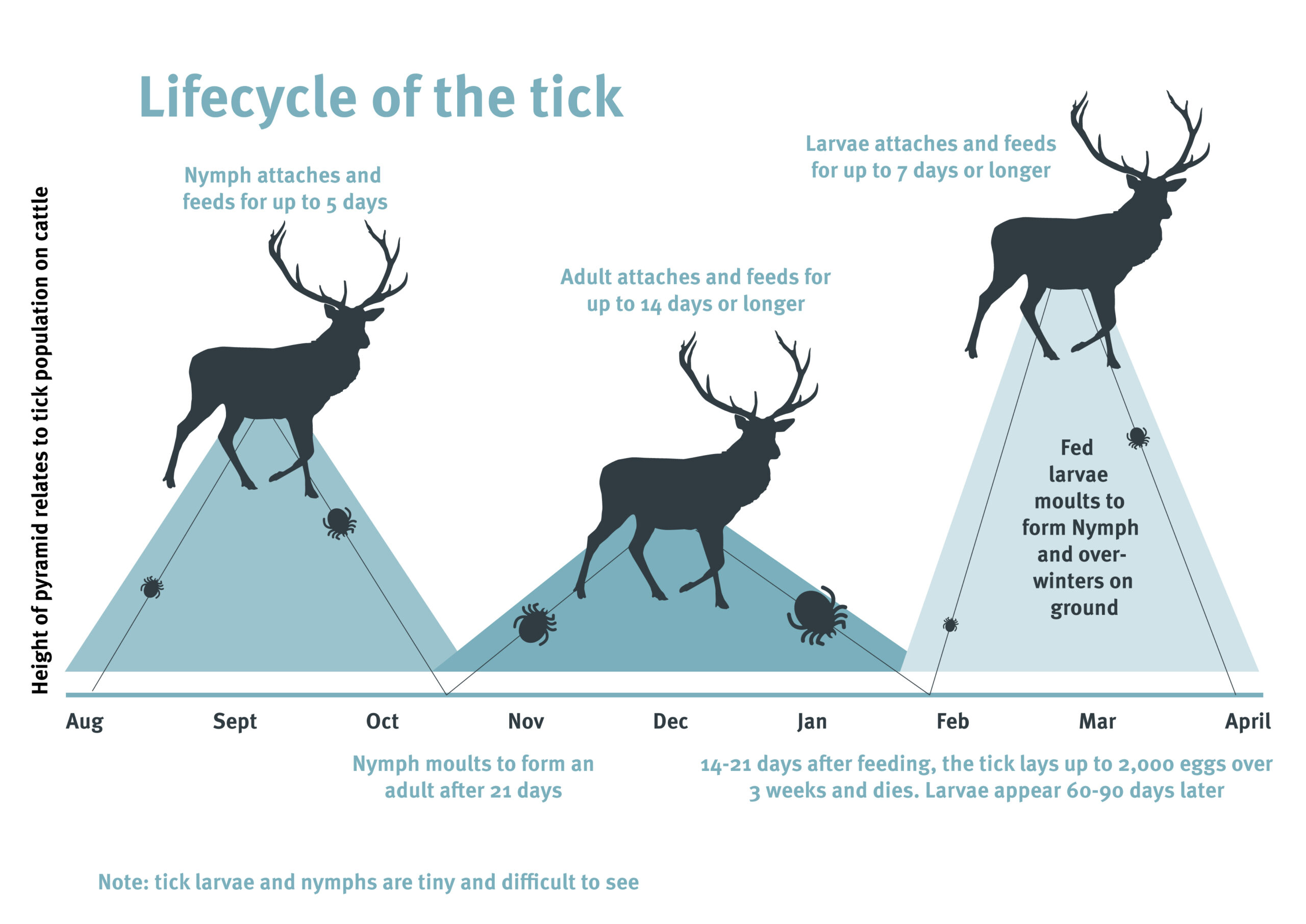
In some areas such as Northland, winters are mild enough for more than one generation to occur each year.
Adults and nymphs can be seen almost all year round and larvae from late spring through to autumn.
Treatment options for ticks
1. Flumethrin Pour-On
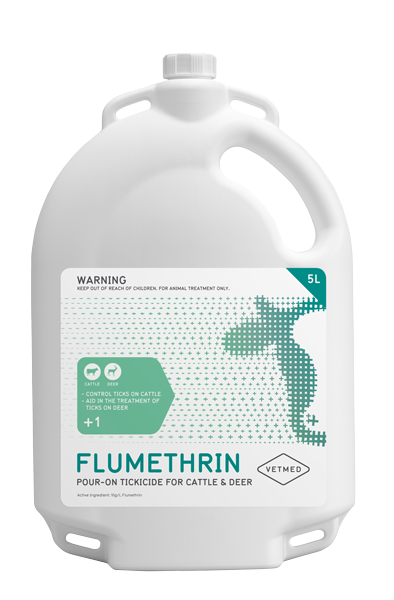
A synthetic pyrethroid insecticide that is effective against all three stages; Larvae, Nymphs and Adults and provides 3 weeks persistent activity. Flumethrin pour-on also has a convenient nil meat and milk withholding period for flexible treatment.
When treating ticks, aim to remove ticks from infected animals and target the ‘nymph period’ in late spring to reduce numbers of adults in late summer/autumn.