
Nuisance flies, lifecycle, control and treatment options
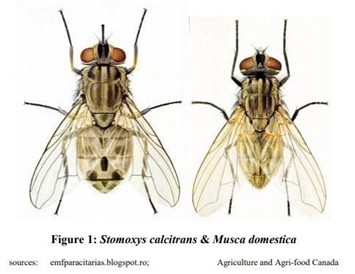
Also known as a stable fly or scientifically as Somoxys calcitrans, the nuisance fly is very similar to a house fly but is distinguished by a piercing mouth part that allows them to feed on the blood of cattle.
Nuisance flies have four black stripes on their back, and a central grey stripe which is wider than those on either side.
What do nuisance flies do?
Nuisance flies bite and feed on the blood of cattle, preferentially feeding early morning and late afternoon (milking times).
One adult nuisance fly can remove ~12μL of blood per meal and will feed up to twice a day.
Nuisance flies preferentially settle on the legs, udder, and lower abdomen to feed, and orientate themselves with their head pointing up the leg of the animal.
Common signs of nuisance flies in stock
- Irritation results in lost feeding time, which results in a drop in production.
- Irritation in cow shed (kicking and tail flicking) resulting in less efficient milking and loss in production. Can also bite the humans in the shed!
- Nuisance fly bite lesions can increase the spread of skin diseases such as ringworm and rain scald.
- Mobbing in paddocks, resulting in damage to pasture.
- Potential to transmit diseases such as mastitis and pinkeye (or other diseases not currently in New Zealand).
Nuisance fly life cycle and ideal conditions
Nuisance flies go through three larval stages off the animal before developing into adult flies.
The length of life cycle is temperature and feed dependent but takes somewhere between 22-58 days.
An adult nuisance fly lives for around one month, with males dying soon after mating and females soon after egg laying.
Female nuisance flies must feed a minimum of three times before laying eggs, of which they can produce up to 3,000 of in their lifetime.
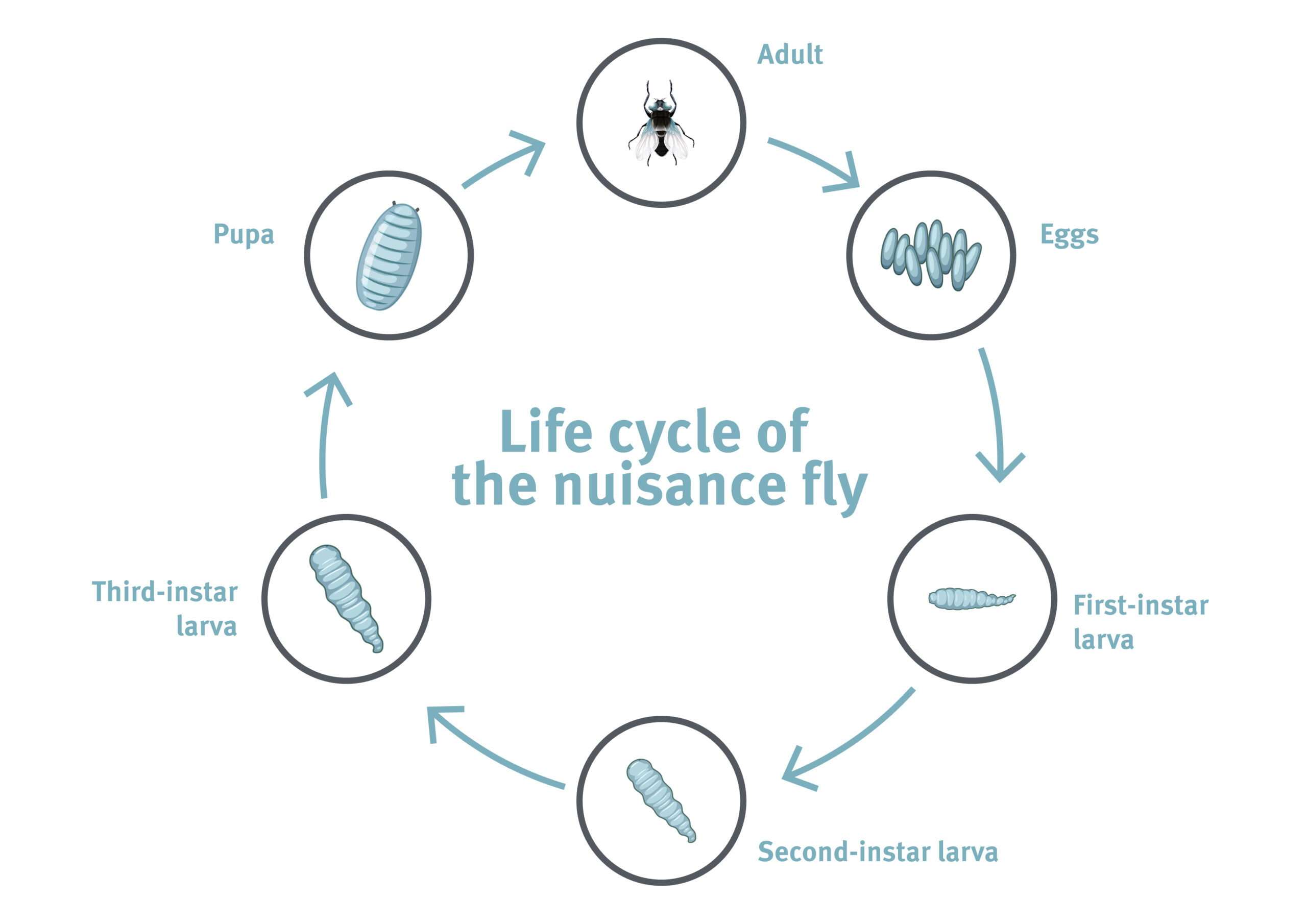
Nuisance flies lay eggs in areas of rotting organic matter as this provides nutrition to the growing larvae.
e.g:
- Uncovered silage stacks
- Manure piles
- Effluent drainage areas
- Soiled bedding
- Waste feed piles
In cool climates, adult nuisance flies can overwinter in a state of semi-hibernation, the pupae prolonging development until temperatures become more favourable. Adult nuisance fly activity is, therefore, most commonly seen over summer and autumn in New Zealand.
Nuisance fly treatment and control options
1. Hygiene: limit breeding grounds where possible.
2. Insecticide pour-on for cows
These are best started early in the season when numbers are lower to prevent exponential growth in the fly population.
3. Vetmed’s Delmax
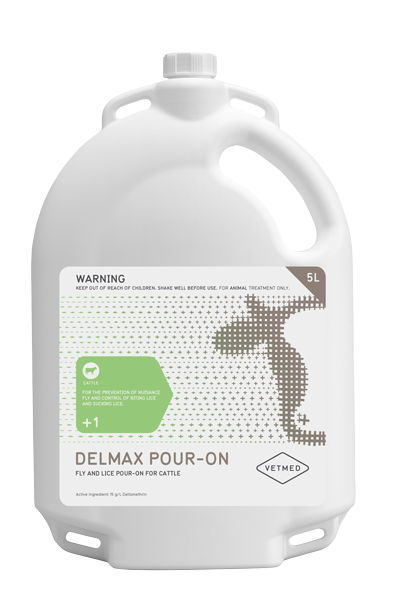
Provides an easy and cost-effective control measure providing up to 4 weeks protection from flies.